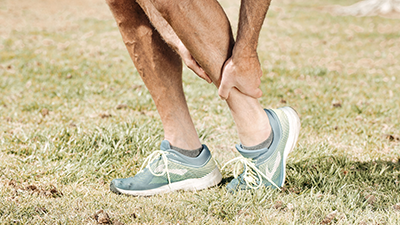


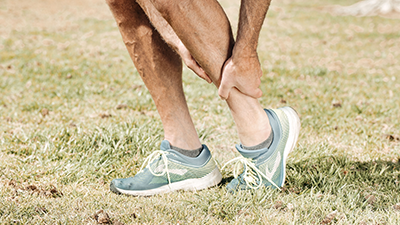
 "It only hurts when I start exercising… then it settles down." Sound familiar?
Whether it's your Achilles after a morning walk, your shoulder when reaching overhead, your elbow while lifting groceries, or your knee during a run, persistent tendon pain is a common complaint. If the pain has been lingering for weeks or keeps returning, you may be experiencing tendinopathy.
What is Tendinopathy?
Tendinopathy is a condition causing pain and reduced function in a tendon, the strong rope-like structures that connect muscles to bones. When a tendon is repeatedly exposed to more stress or activity than it can handle, it may struggle to adapt and recover. Over time, this can lead to changes within the tendon, making it less able to tolerate everyday activities. This may result in symptoms such as pain, stiffness, weakness, or discomfort with movement.
Common examples of tendinopathy include:
- Achilles tendinopathy (pain at the back of the ankle)
- Patellar tendinopathy (“jumper’s knee”)
- Tennis or golfer’s elbow (pain around the elbow tendons)
- Rotator cuff tendinopathy (shoulder tendon pain)
Activities such as running, jumping, throwing, gardening, cleaning, typing, or weight training can contribute to tendinopathy, especially when there are sudden increases in how often, how hard, or how much these activities are performed.
The next steps to tackle tendinopathy…
While most people’s first instinct is to stop activity and rest when they experience pain, this is actually more harmful in the case of tendinopathy. In order for a tendon to improve its ability to tolerate stress and load, gradual and progressive strengthening of the tendon is needed. Activity is encouraged to prevent further weakness of the tendon from occurring with adequate rest vital to enable the tendon to heal properly.
How can Osteopathy help?
The goal of osteopathic care is to reduce pain, restore function and help you safely return to your everyday activities, sport or work by improving the tendon’s ability to tolerate load. An osteopath may enquire about daily activities, work demands, exercise routine and lifestyle factors to help identify possible causes.
During hands-on assessment and treatment, an osteopath may address factors like muscle imbalances or poor mechanics that may be placing extra stress on the tendon. This aims to help optimise how your body moves and supports the tendon during recovery. An individualised rehab plan may be provided to build tendon strength alongside advice on management to optimise recovery and support safe return to activities.
Written by Isabella Shade
References
Cleveland Clinic. (2022). Tendinopathy: Symptoms, Causes & Treatment. In Cleveland Clinic. https://my.clevelandclinic.org/health/diseases/22289-tendinopathy
Cook, J. L., Rio, E., Purdam, C. R., & Docking, S. I. (2016). Revisiting the continuum model of tendon pathology: What is its merit in clinical practice and research? British Journal of Sports Medicine, 50(19), 1187–1191.
Rio, E., Kidgell, D., Purdam, C., Gaida, J., Moseley, G. L., Pearce, A. J., & Cook, J. (2015). Isometric exercise induces analgesia and reduces inhibition in patellar tendinopathy. British Journal of Sports Medicine, 49(19), 1277–1283.
Silbernagel, K. G., Hanlon, S., & Sprague, A. (2020). Current clinical concepts: conservative management of achilles tendinopathy. Journal of Athletic Training, 55(5), 438–447. https://doi.org/10.4085/1062-6050-356-19